When an articulating boom fits the job
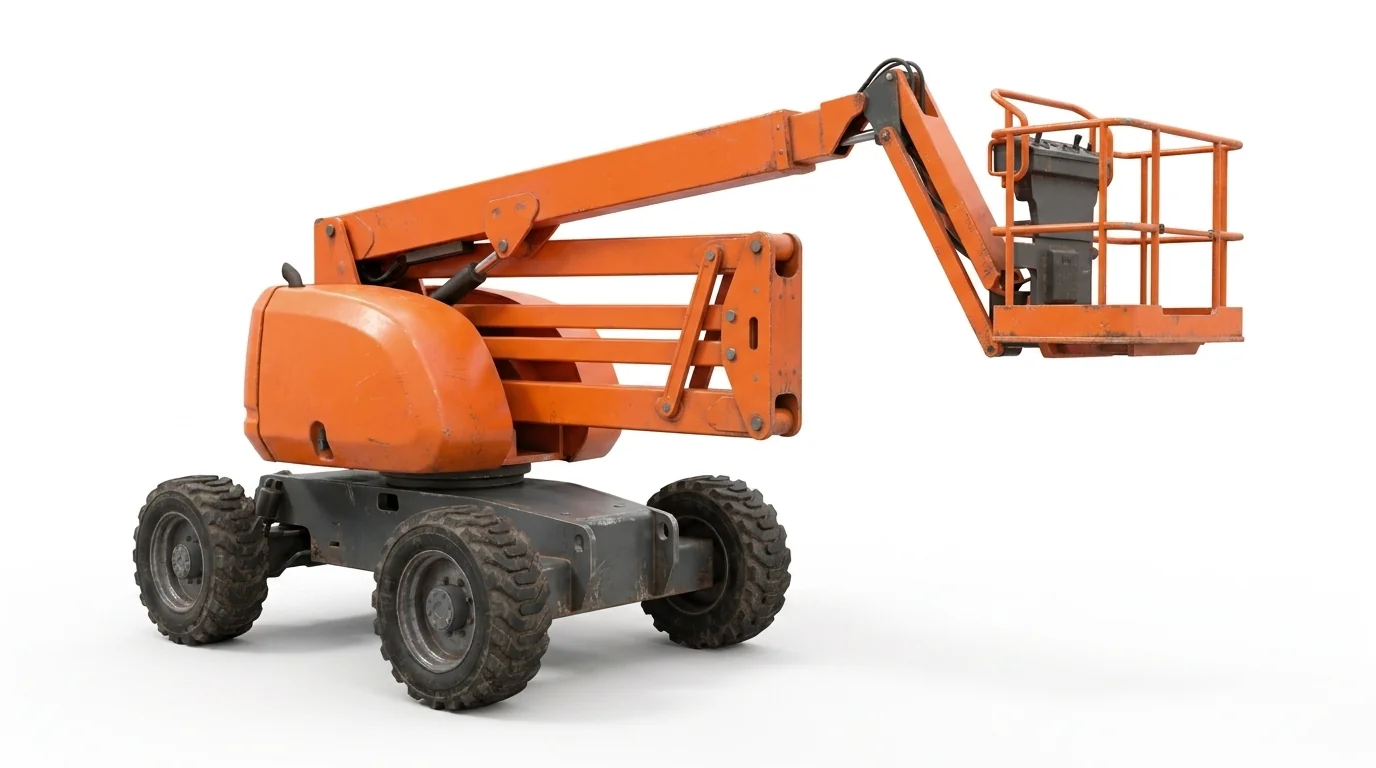
Start with the obstacle. If ducts, storage racks, or canopy edges block a straight path, an articulating boom’s knuckle joints can place the platform over and beyond that interference. The machine can sit beside the work, reach above it, and position inward without rolling under suspended loads.
- Can the machine sit below the task? If not, a Z-boom is often the comparison point.
- Is there a need to retract around beams or route through a doorway? Compact articulating frames and folding jibs help in those cases.
Columbus interiors and exterior ground affect setup
Local distribution buildings often combine tall clear heights with dense racking. That means planning for aisle width, turning radius, and platform positioning without displacing inventory. Outdoors, clay-heavy soils in Central Ohio can stay soft after freeze-thaw weather and rain. Around loading aprons or utility yards, that surface condition favors units with appropriate tires and oscillation for uneven ground. Actual site procedures and the selected unit’s instructions set the final limits.
Power source and emission considerations
Where ventilation is limited—such as inside large fulfillment spaces or mechanical rooms—electric articulating booms reduce exhaust concerns and allow quiet, precise placement. Diesel or dual-fuel units suit exterior steel work and façade maintenance where longer duty cycles and rough-terrain capability matter.
Key measurements that narrow the model
- Up-and-over height: clearance to crest above an obstacle before reaching in.
- Horizontal reach from the turret: distance from the rotation center to the work.
- Platform capacity: tool loads common to commissioning and MEP punch lists.
- Width and stowed height: for entry through doors and under mezzanines.
- Turning radius and tail swing: for narrow aisles and column lines.
Related comparisons in Columbus
- For long, unobstructed reach to façades or tanks, see /telescopic-boom-lift-rental/.
- For slab-only indoor tasks with straight-up access, compare /electric-scissor-lift-rental/.
- For exterior platform work on softer sites, review /rough-terrain-scissor-lift-rental/.
Planning notes for high-tech builds
Regional high-tech facility construction involves congested utility runs and sensitive clean-build sequences. Articulated geometry allows positioning from outside controlled areas, reducing travel through narrow transitions and protecting finished surfaces.